












Customer Engagement
Customer engagement in banking is shifting as digital becomes the primary interface. It is a harsher arena: attention is scarce, tolerance for friction is collapsing, and customers benchmark banks against the best digital experiences in their daily lives, not just against peer institutions. Forrester’s data is unambiguous: 73% of online adults in Australia, 68% in the UK, and 65% in the US agreed they should be able to “accomplish any financial task through a mobile app”. That expectation sets a demanding standard for simplicity, continuity, and “first time right” execution across every journey.
The economics are equally unforgiving. Signicat found that 68% of consumers have abandoned a financial application during onboarding, a direct indicator that engagement is now won or lost in the workflow, not in brand messaging. And even when banks do communicate, customers are increasingly resistant to noise. Accenture’s Banking Consumer Study 2025 reports that more than half of customers, 51%, feel “bombarded by advertising”.
The implication is clear: banking leaders must match the pace of an industry that is resetting engagement standards and customers who are raising expectations faster than banks are adapting. Incremental change is no longer sufficient. What is required is decisive innovation and disciplined execution to consistently outperform the new baseline.
Authors:
Siddhant Taneja, Santosh Ganapathy, Supriya Sridhar Sathnur, Anmol Khiwal

Intelligent Engagement Stacks
A transition is underway in banking to infuse more autonomy in customer engagement. While human assistance is still valuable for complex needs, unassisted self-service for routine tasks has become table stakes. The end state is rapidly moving toward human-equivalent interactions, where digital banking shifts from a channel to an intelligent counterpart that can understand intent, reason through complexity, and complete tasks. As AI advances along an AGI trajectory, engagement will go from answering questions to owning outcomes.
While AGI lacks standardized banking adoption benchmarks currently, the directional signals are clear. GenAI-powered conversational agents are becoming the default entry point for service, while multi-step orchestration is displacing point automation. Gartner forecasts that by 2028 at least 70% of customers will start their service journey with conversational AI, increasingly through third-party assistants embedded in consumer devices.
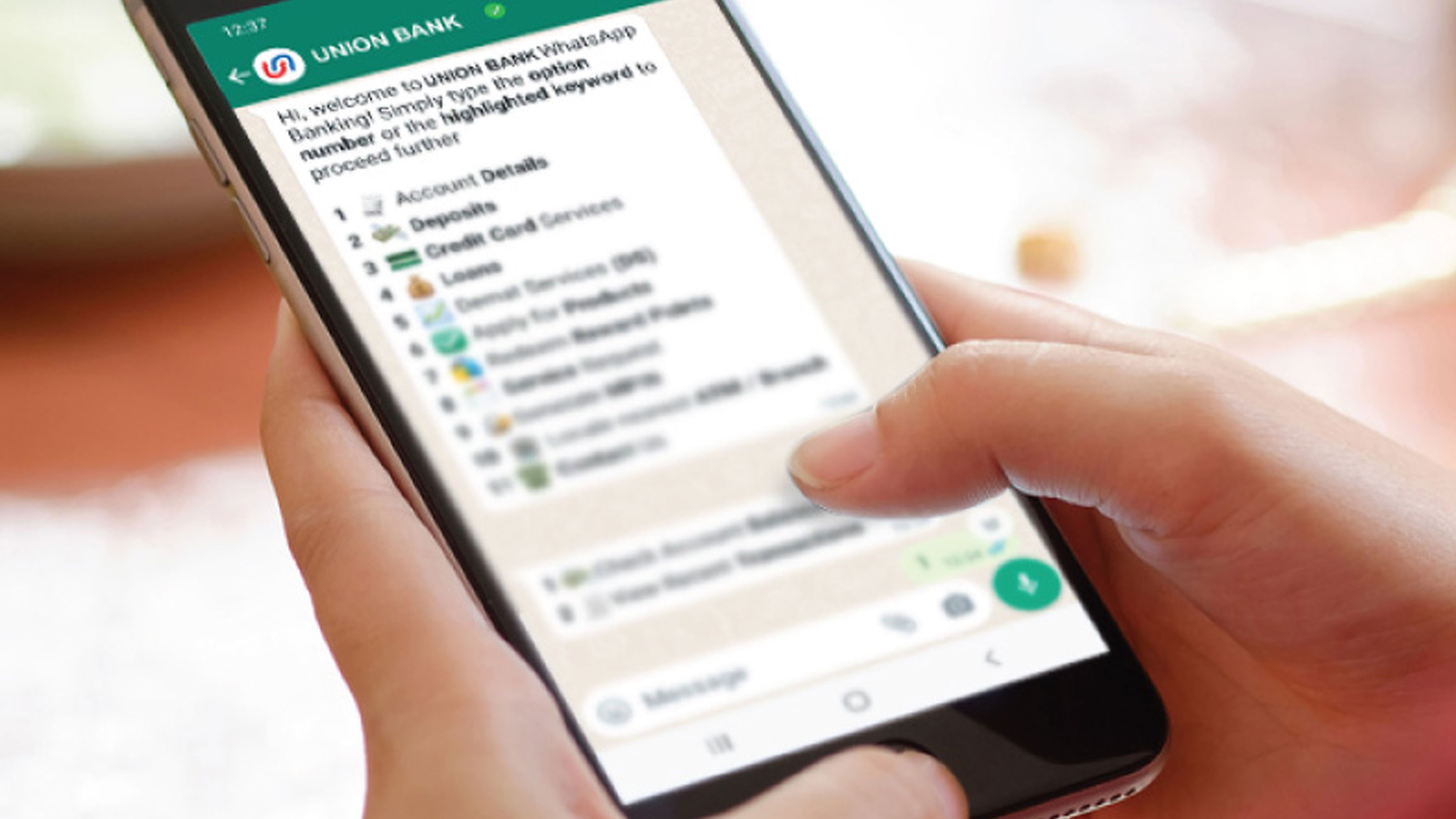
In banking, the decisive capability is orchestration as customers move across web, mobile, social, and in-person channels, and fragmentation forces them to repeat themselves and drop off. Agentic AI is now beginning to show up across forms and channels to bridge this gap: chat, voice, in-app assistants, employee copilots, and kiosk-based assistants. The real value will come from the agents’ ability to stitch together processes into a single end-to-end workflow that feels seamless to the customer.
What this means for banks
- Build “digital memory” that persists across channels, products, and journeys.
- Treat orchestration as the north star, not chatbot deflection rates.
- Engineer for governance: audit trails, policy controls, model risk management, and resilience.
Outcome
Conversations that feel human, and journeys that complete reliably.
Composable UI and UX
Digital experience is no longer a channel strategy. It is the bank. This has two implications. First, small UX defects have outsized commercial impact. Second, banks must improve journeys continuously because expectations move faster than traditional release cycles. Yet many institutions remain constrained by legacy front ends, fragmented channel designs, and developer-heavy delivery models.
AI-powered composable UI and UX changes the operating model by making experiences both modular and intelligent. Design systems and journey patterns become reusable components, while AI helps sense friction, generate and test UI variants, optimize microcopy and next-best prompts, and personalize flows based on intent and context, without redesigning the entire front end for every improvement. Banks can prototype, localize, and deploy updates rapidly across mobile, web, and assisted channels, with consistency enforced through governed patterns and policy-aware deployment.

What this means for bankers
- Reduce time-to-change for priority journeys: onboarding, servicing, payments, lending fulfillment.
- Institutionalize test-and-learn, with clear guardrails and measurable outcomes.
- Modernize progressively, so experience keeps improving while core modernization continues.
Outcome
Smoother, constantly improving experiences for customers, and a faster learning cycle for the bank.

Segment-of-One Engagement
The era of one-size-fits-all engagement is over. While many banks have realized this, they are attempting to deliver personalization and orchestrated journeys on top of fragmented data. Marketing behavioral signals and banking operational data remain siloed across platforms, teams, and vendors, leading to weak segmentation, inconsistent measurement, inefficient campaigns, and slow progress in AI-driven engagement.
McKinsey estimates that 15 to 20% of marketing spend can be released through stronger marketing ROI discipline, creating capacity for reinvestment or direct bottom-line impact. In banking, the execution gap is even starker. Despite significant AI investment, only 8% of banks apply predictive insights from machine-learning models to inform campaigns. McKinsey also quantifies the upside of breaking silos: banks that codify, unify, and centralize key analytics generate higher campaign revenue and launch campaigns two-to-four times faster.
This is where platform thinking becomes decisive. Synchronizing marketing behavior signals, for example with products like Infosys Aster, with core transactional and relationship data enables richer real-time profiles and earlier detection of intent. To avoid superficial progress, banks should treat synchronization as an enterprise program, with identity resolution, consent, governance, and shared metrics designed in from the start.
What this means for bankers
- Prioritize data synchronization that connects behavior, intent, and transaction reality.
- Build common customer definitions and shared measurement across marketing, product, service, and risk.
- Create a closed loop where insights trigger action, and outcomes retrain models and refine journeys.
Outcome
Insight-fueled personalization that is precise, measurable, and scalable, with more “gets me” moments for customers and higher efficiency for the bank.
A Practical Agenda for 2026 and Beyond
Banks do not have the luxury of incrementalism in engagement. Expectations are being reset in real time by AI-native experiences, and tolerance for friction is collapsing. The risk is not missing a feature cycle, it is allowing relevance and responsiveness to become a structural disadvantage.
The mandate now is to make engagement a managed system: continuity that carries across touchpoints, orchestration that completes outcomes end-to-end, and change that ships safely and frequently under governance. Institutions that act decisively will convert engagement into a compounding advantage, compressing cycle times, lifting conversion, lowering cost-to-serve, and deepening lifetime value. Those that wait will find the gap harder to close, because the baseline will keep moving.
Related Case Studies


Let’s Discuss
Fill out the form below and we will get back to you shortly. Alternately, you can also contact our regional offices